How to Spot a Hidden Plumbing Leak Before It Spreads
A hidden plumbing leak can start quietly. You may not see water on the floor right away, but small signs often appear before serious damage happens.
At Flowline Plumbing Co., we help homeowners identify leaks early, understand the source, and fix the issue before it affects cabinets, walls, flooring, or nearby fixtures.

Why hidden leaks are easy to miss
Not every leak looks like a burst pipe or a puddle under the sink. Some leaks happen behind walls, inside cabinets, under flooring, near toilets, or around water heater connections.
Because the water moves slowly, the first signs may feel minor. A cabinet may smell damp. A wall may show a light stain. A floor may feel softer than usual. These small changes are worth checking because moisture can travel farther than the leak itself.
Common hidden leak areas include:
- Under kitchen and bathroom sinks
- Behind toilets and shower valves
- Near water heater supply lines
- Inside vanity cabinets
- Behind washing machine connections
- Under flooring near plumbing fixtures
- Along exterior hose bibs and pipe connections
The faster a leak is inspected, the easier it is to prevent wider damage.
Watch for changes in your water bill
A sudden increase in your water bill can be one of the first clues that something is wrong. If your daily water use has not changed but the bill is higher than usual, a hidden leak may be running somewhere in the system.
This does not always mean the leak is large. Even a slow drip can waste water over time. Toilets, supply lines, and small pipe connections can continue leaking for days or weeks before anyone notices visible water.
When the bill changes unexpectedly, check fixtures, listen for running water, and schedule an inspection if the source is unclear.
Look for stains, bubbling paint, or soft surfaces
Water often leaves marks before it creates obvious damage. Stains on ceilings, walls, or cabinet surfaces can point to moisture behind the material.
Paint or drywall may bubble. Wood may feel swollen. Flooring may feel loose, soft, or slightly uneven. These signs should not be ignored because they often mean water has already reached surrounding materials.
Areas near bathrooms, kitchens, laundry rooms, and utility spaces should be checked regularly, especially if you notice a new smell, stain, or texture change.
Pay attention to musty smells
A musty smell is one of the most common signs of trapped moisture. If a cabinet, bathroom, laundry area, or wall corner smells damp even after cleaning, there may be water collecting where air cannot dry it quickly.
Moisture inside enclosed spaces can create long-term problems. It can damage wood, encourage mold growth, and make repairs more expensive if the issue continues.
If the smell keeps returning, the next step is to inspect the nearby plumbing instead of covering the odor with cleaning products.
Check under sinks and around fixtures
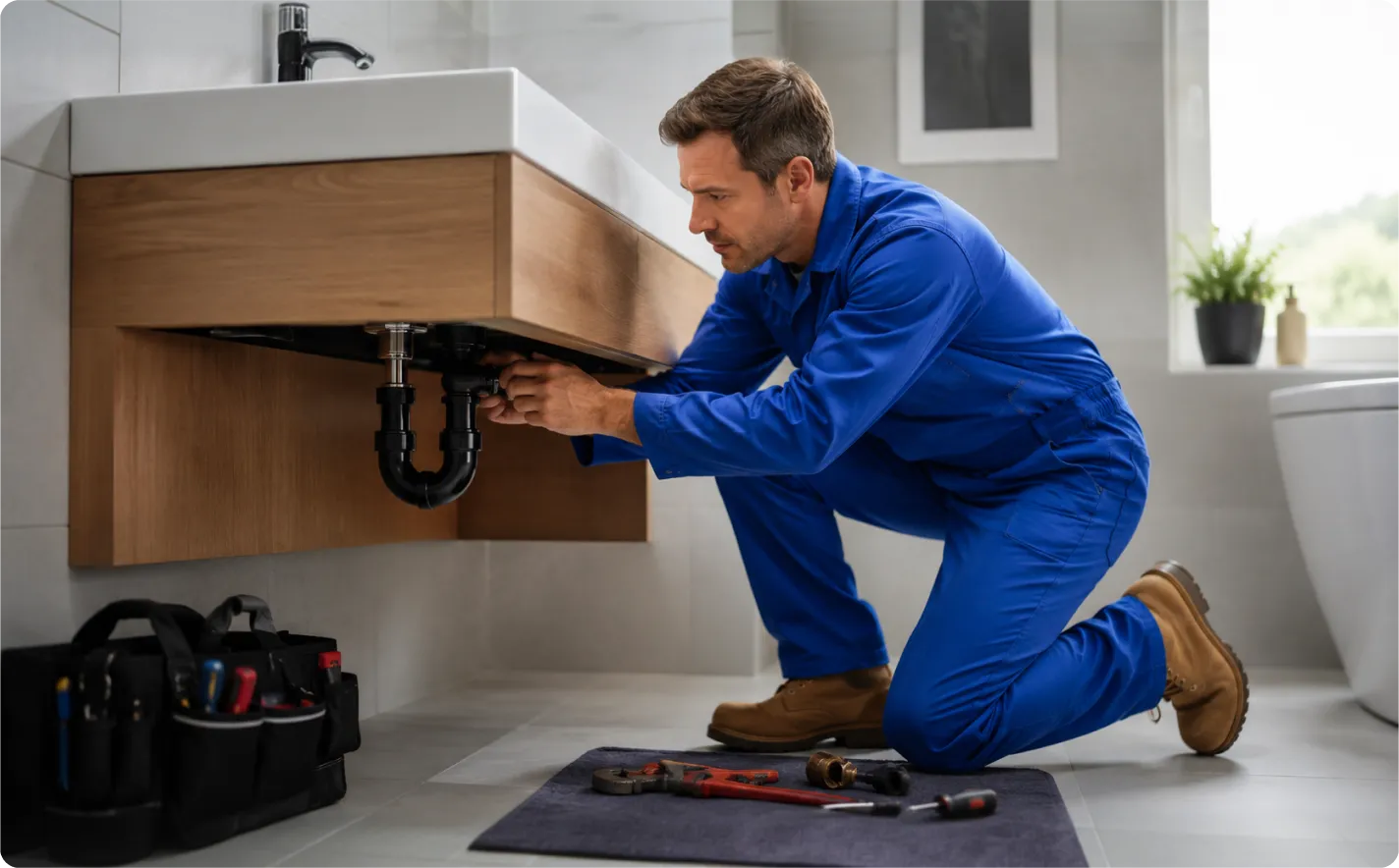
Some leaks are hidden in plain sight. Open the cabinet below your sink and look at the supply lines, drain pipe, shutoff valves, and bottom of the cabinet.
Signs to look for include water marks, rust, dampness, warped wood, mineral buildup, or small drops forming near a connection.
Also check around toilets, faucets, tubs, and shower fixtures. A loose connection or worn seal can allow water to escape slowly and spread into nearby surfaces.
Do not wait for the leak to become obvious
Many homeowners wait until water becomes visible. The problem is that visible water often means the leak has already been active for some time.
Early inspection helps reduce damage and gives you clearer repair options. A small connection repair may be enough when the issue is caught early. When the leak spreads, the repair may involve plumbing, drywall, flooring, cabinets, or mold remediation.
Plumbing problems are usually easier to solve when they are still small.
What a professional leak inspection includes
A professional plumber looks beyond the visible moisture. At Flowline Plumbing Co., our leak inspection focuses on finding the source, checking nearby connections, and explaining the best repair option clearly.
A typical inspection may include:
- Checking visible pipes, fittings, and fixture connections
- Inspecting under-sink plumbing and shutoff valves
- Testing faucets, toilets, and drains
- Reviewing water heater connections
- Looking for moisture patterns around affected areas
- Explaining the repair before work begins
The goal is not just to dry the area. The goal is to stop the leak at the source.
Simple prevention habits
You can reduce leak risk by checking visible plumbing areas every few weeks. Look under sinks, around toilets, near the water heater, and behind appliances where water lines are connected.
Replace aging supply hoses when they show wear, avoid ignoring slow drips, and call a plumber when you notice stains, moisture, or pressure changes.
Small habits can protect your home from larger water damage.
Need help finding a leak?
If you notice dampness, stains, musty smells, or a higher water bill, Flowline Plumbing Co. can inspect the issue and help you understand what needs to happen next.
Our team provides clear leak repair, clean workmanship, and practical recommendations that help protect your home.